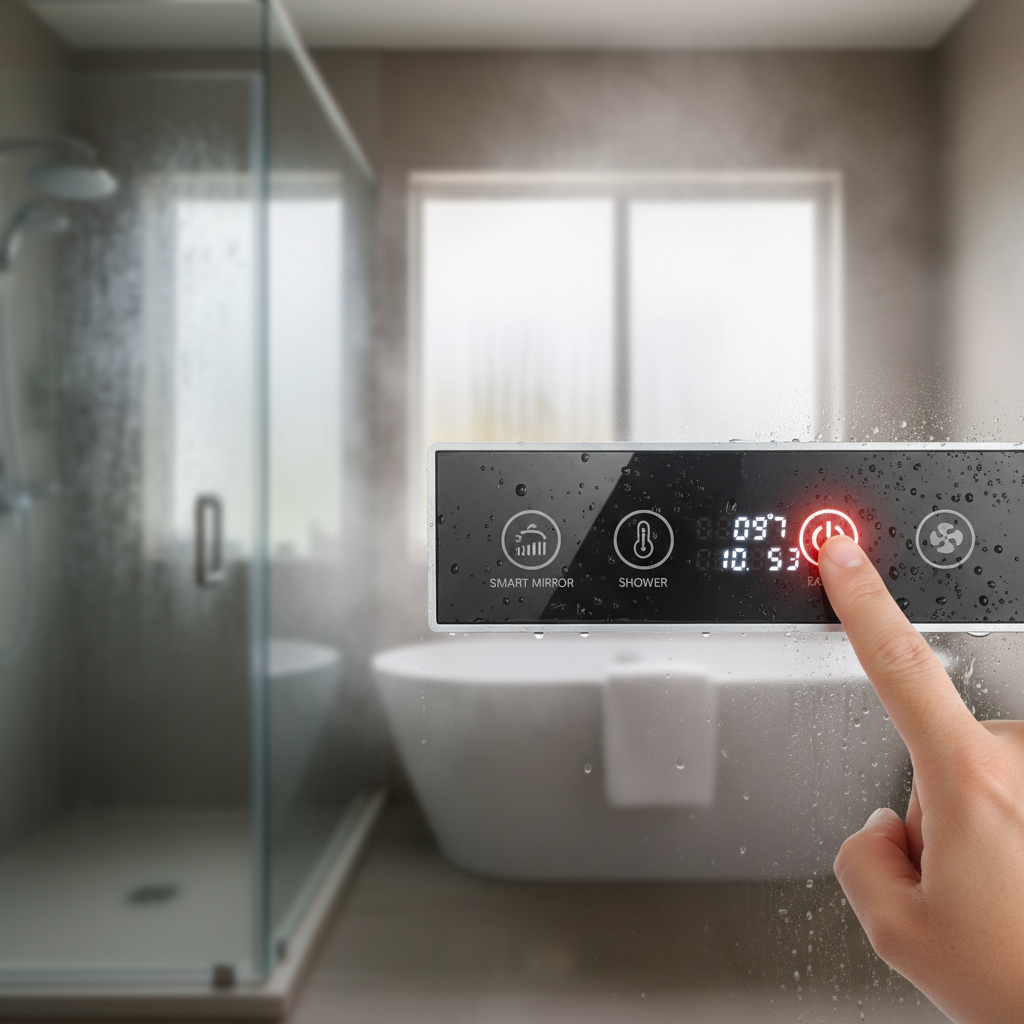
The modern bathroom, often a sanctuary of relaxation, increasingly features touch-sensitive technology, from smart mirrors and shower controls to night lights and exhaust fan switches. These innovations promise seamless interaction and sleek design. Yet, for many, the dream quickly turns into a damp nightmare as these touch sensors become unresponsive, erratic, or simply fail. This common frustration isn’t just a minor inconvenience; it points to fundamental clashes between sophisticated electronics and the challenging, moisture-rich environment of a bathroom. Understanding why touch sensors struggle in these conditions is key to appreciating their limitations and choosing reliable solutions.
Understanding Touch Sensor Technology
At the heart of most modern touch-sensitive devices, including those found in bathrooms, lies capacitive touch technology. Unlike older resistive screens that relied on physical pressure, capacitive sensors detect changes in an electrical field. They typically consist of a transparent conductive material, such as indium tin oxide (ITO), coated onto a glass or plastic substrate. When a human finger, which is also electrically conductive, approaches or touches the surface, it draws a minute electrical current, thereby altering the sensor’s electrostatic field or capacitance. The device’s internal circuitry then measures this change and triangulates the touch location, registering it as an input. This ingenious mechanism allows for highly responsive and intuitive interfaces, making them popular for their smooth operation and durability compared to mechanical buttons. However, this very sensitivity makes them vulnerable in environments where other conductive elements are abundant, such as a steamy bathroom.
The Humid Bathroom Challenge: Primary Causes of Failure
Humid bathrooms present a multi-faceted assault on touch sensor functionality, primarily due to the ubiquitous presence of water.
Condensation and Surface Water Interference
The most immediate and noticeable impact of humidity on touch sensors comes from condensation and surface water. When hot showers or baths fill the air with steam, this water vapor condenses into tiny droplets on cooler surfaces, including touch panels. Water, especially tap water with its dissolved electrolytes, is a conductor of electricity. These water droplets, settling on the sensor’s surface, can mimic the electrical properties of a human finger. This leads to a range of frustrating issues:
- False Touches/Phantom Inputs: The sensor might register “touches” even when no one is interacting with it, turning lights on and off or activating unintended functions.
- Erratic Behavior: The sensor may become highly inconsistent, sometimes responding, sometimes not, or even activating multiple functions simultaneously.
- Reduced Sensitivity: The layer of water can disrupt the sensor’s ability to accurately detect a legitimate finger touch, making the device unresponsive.
|
Our Picks for the Best Touch sensor night light in 2026
As an Amazon Associate I earn from qualifying purchases.
|
||
| Num | Product | Action |
|---|---|---|
| 1 | Red Night Light for Sleep, 670nm Night Lamp with White Light 3000K-6500K & Timer, Portable Red Reading Light for Bedroom, Touch/Remote Control, 360° Illumination, Stepless Dimmable, Hangable |

|
| 2 | Portable Baby Night Light, 3 Colors Egg Light for Nursery, Mini Bedside Table Lamp for Kids Adults, Touch Control & Eye Caring & Rechargeable Dimmable LED Lamp for Nursing, Boy, Girl, Toddler |
|
| 3 | EverBrite Rechargeable Round Motion Sensor LED Night Light, Motion Activated LED Night Light with 3 Lighting Modes, Touch Control, 3 Color Temperatures & Dimmable, for Hallway, Bedroom, 2 Pack |
|
| 4 | Portable Baby Night Light, 3 Color Egg Lights for Nursery, 2400mAh, Small Rechargeable LED Lamp, Dimmable Touch Nightlight for Newborn, Toddler, Kids, Adults |
|
| 5 | JolyWell Night Light for Kids, Baby Night Light with 7 Colors Changing Mode & Stepless Dimming, Nursery Night Light BPA Free,Rechargeable Egg Night Light for Breastfeeding 1h Timer & Touch Control |
|
| 6 | UNIFUN Night Light, Touch Lamp for Bedrooms Living Room Portable Table Bedside Lamps with Rechargeable Internal Battery Dimmable 2800K-3100K Warm White Light & Color Changing RGB (Regular Size)… |
|
| 7 | G Keni Nursery Night Light for Baby, Portable LED Touch Night Lamp for Kids and Adult, Breastfeeding, Sleep Aid, USB Rechargeable Nursing Lamp, Bedside Dimmable Warm Night Light, Soft Eye Caring |
|
| 8 | RTSU Rechargeable Touch Light, DIY Stick Anywhere Led Night Light Touch Lamp Tap Light (Touch Sensor Switch, Stepless Dimmer, Last Setting Memory, Built-in Battery Powered, Warm White Light) |
|
| 9 | MediAcous Night Light for Kids, Baby Egg Light for Nursery, 7 Colors Changing & Stepless Dimming, Soft Silicone Touch Night Lamp with 1 Hour Timer, Rechargeable Nursery Night for Breastfeeding |
|
| 10 | RTSU Rechargeable Mini Touch Night Light, Wireless LED Lamp for Kids - Portable, Dimmable Nursery Lamp |
|
Essentially, the water creates electrical “noise” that overwhelms or confuses the sensor’s delicate detection system, preventing it from distinguishing between an intentional human input and environmental moisture.
Moisture Ingress and Internal Corrosion
Beyond surface-level interference, prolonged exposure to high humidity poses a more insidious threat: moisture ingress and internal corrosion. Over time, water vapor can penetrate tiny gaps, seams, or imperfect seals in a device’s enclosure, reaching the sensitive internal electronics. Once inside, this moisture can:
- Corrode Circuit Boards and Connectors: Metal components, critical for electrical connections, are highly susceptible to oxidation and corrosion in the presence of water and oxygen. This chemical degradation can lead to increased electrical resistance, intermittent connections, or complete circuit failure.
- Short Circuits: Water, being conductive, can bridge electrical paths that are not meant to connect, causing short circuits. This can lead to component damage, permanent malfunction, or even safety hazards.
- Performance Degradation: Even without catastrophic failure, internal moisture can degrade the performance of microprocessors and other electronic components, leading to slower response times, decreased accuracy, and overall unreliability.
This type of damage is often cumulative and can lead to permanent failure, making the device irreparable.
Inability to Differentiate Finger from Water
Capacitive sensors are designed to register a distinct change in capacitance created by the unique electrical properties of human skin. However, water, particularly tap water found in bathrooms, also possesses dielectric properties and electrical conductivity that can either confuse or mask these signals. The sensor’s algorithms are tuned to specific patterns, and when a layer of water or water droplets is present, it fundamentally alters the electrical environment. The sensor struggles to:
- Distinguish between water’s capacitance and a finger’s capacitance: It might interpret a large area of water as a broad touch, or small droplets as multiple, erroneous touches.
- Filter out background noise: The constant presence of a conductive film of water makes it difficult for the sensor to isolate the subtle, distinct signal of a finger.
“Modern capacitive touchscreens are incredibly sensitive, designed to detect the minute electrical changes a human finger creates. When water enters that equation, it introduces its own set of conductive properties, essentially creating a ‘ghost touch’ or disrupting the carefully calibrated field.”
Beyond the Obvious: Other Contributing Factors
While condensation, moisture ingress, and sensor confusion are primary culprits, several other factors contribute to touch sensor woes in humid environments:
- Temperature Fluctuations: Bathrooms often experience rapid temperature swings, from a cool ambient temperature to a hot, steamy environment. These fluctuations exacerbate condensation, as warm, moist air quickly cools on device surfaces, depositing water. This thermal cycling can also put stress on materials and seals, potentially creating micro-fissures that allow moisture ingress.
- Material Limitations: The effectiveness of a touch sensor in a humid environment heavily depends on the quality of its manufacturing and the materials used. Poorly sealed enclosures, inadequate hydrophobic coatings, or non-resistant components will dramatically increase vulnerability. Even seemingly robust plastics can degrade over time, losing their protective qualities.
- Lack of Proper IP Rating: Many electronic devices are not designed or rated for use in wet or humid conditions. An IP (Ingress Protection) rating indicates a device’s resistance to dust and liquids. Devices without an adequate IP rating (e.g., IPX4 for splash resistance, or higher for immersion) are inherently ill-suited for bathroom environments, regardless of their touch technology.
Mitigating Failure: How Manufacturers and Users Address the Issue
Understanding the vulnerabilities of touch sensors in humid bathrooms highlights the importance of thoughtful design and informed user choices.
For Manufacturers
Manufacturers employ several strategies to improve the resilience of touch sensors in challenging environments:
- Higher IP Ratings: Designing products with appropriate IP ratings (e.g., IP65 or IP67) ensures robust sealing against water spray, jets, or even temporary immersion, protecting internal electronics.
- Optical Bonding: This process involves bonding the touch panel directly to the display or top glass with a clear adhesive, eliminating air gaps. This prevents condensation from forming between layers and can improve optical clarity and impact resistance.
- Hydrophobic and Anti-Fog Coatings: Applying specialized coatings to the touch surface can repel water, causing it to bead up and roll off, rather than forming a conductive film. Anti-fog treatments reduce condensation buildup.
- Advanced Algorithms: Sophisticated software algorithms can be developed to better differentiate between water interference and legitimate finger touches, improving accuracy even in damp conditions.
- Resistive Touch (for specific applications): While less common in consumer electronics, resistive touch technology, which relies on physical pressure, is inherently less susceptible to water interference. Some industrial or specialized bathroom applications might still leverage this.
For Users
Consumers can also take steps to minimize touch sensor issues in their bathrooms:
- Ensure Good Ventilation: Always use an exhaust fan during and after showers to reduce overall humidity levels. Proper ventilation can significantly limit condensation on surfaces.
- Strategic Placement: Position touch-sensitive devices away from direct splash zones (e.g., showerheads, sink faucets) to prevent direct water contact.
- Choose Appropriately Rated Products: When purchasing new bathroom electronics, always check the product’s specifications for an IP rating suitable for its intended use in a humid environment.
- Regular Cleaning: Regularly clean touch surfaces with a dry, soft cloth to remove water spots, soap scum, and mineral deposits, which can also interfere with sensor performance.
- Avoid Using with Wet Hands: While some devices are designed for it, using a non-rated touch sensor with dripping wet hands will almost certainly lead to misreads.
Conclusion
The allure of touch-sensitive technology in the bathroom is undeniable, promising a blend of modern aesthetics and effortless interaction. However, the unique challenges posed by humidity and water demand a deeper understanding of why touch sensors fail in humid bathrooms. From the immediate confusion caused by surface condensation and water’s electrical conductivity to the long-term degradation brought by moisture ingress and internal corrosion, these devices face an uphill battle. By recognizing these vulnerabilities and the scientific principles behind them, both manufacturers and consumers can make more informed decisions, leading to more reliable and satisfying experiences. As technology continues to evolve, the quest for truly robust and intuitive interfaces in every corner of our homes, especially the steamy bathroom, remains a fascinating frontier. How will future innovations overcome these persistent environmental hurdles?
Câu Hỏi Thường Gặp
Do waterproof touch sensors truly work in bathrooms?
Yes, genuinely waterproof touch sensors, typically rated IPX7 or higher, are designed to withstand immersion and should function reliably even with surface water or in highly humid conditions. Their internal components are sealed, and their sensing algorithms are often optimized to differentiate between water and finger touches.
What is a capacitive touch sensor?
A capacitive touch sensor works by detecting changes in an electrical field when a conductive object, like a human finger, approaches or touches its surface. It’s the most common type of touch technology found in smartphones and many modern appliances due to its responsiveness and durability.
Can humidity permanently damage a touch sensor?
Yes, prolonged exposure to high humidity can cause permanent damage to a touch sensor. Water vapor can lead to corrosion of internal electrical components and circuit boards, resulting in performance degradation or complete and irreversible failure of the device.
How can I prevent my touch sensor light from failing in the bathroom?
To prevent failure, ensure good bathroom ventilation to reduce humidity, choose a touch light with an appropriate IP (Ingress Protection) rating for wet environments, and position it away from direct water splashes. Regularly wiping the surface dry can also help.
Is it okay to use a touch screen device with wet hands?
It depends on the device’s IP rating. If a touch screen device is not specifically rated for water resistance (e.g., IPX4 or higher), using it with wet hands can cause erratic behavior, misreads, or even internal damage due to moisture ingress. Always check the manufacturer’s guidelines.